Your cart is currently empty!

Categories
Recent Posts
- Project Spotlight: Crafting the Poland Pavilion for Sial China – A Fusion of Heritage & Modernity
- Partners in Excellence: Brands We’ve Collaborated With at Panda Expo China
- Stand Out at All in Print 2026: Your Premier Exhibition Partner in Shanghai
- From Cost to Investment: A Data-Driven Guide to Winning at Chinaplas 2026

- 2026 Chinaplas Exhibition Booth Strategy Guide Transforming Your Booth into a High-Efficiency Marketing Engine
Archive
Tags
Air Cargo China Airport Experience Summit 2025 Airports Innovate 2025 allana Automechanika Shanghai bangkok BEIJING beijing-exhibition-list china exhibition CHINAPLAS CIPS custom exhibition stand builders events exhibition exhibition booth construction exhibition booth design Exhibitions in china Exhibition Stand Construction EXHIBITION STAND DESIGN exhibition stand designers and builders expo stand builders expo stand design Guangzhou-exhibition-list HONG KONG hong kong exhibition list IAAPA Expo Asia IFES World Summit in Guadalajara ISSCR 2025 Annual Meeting japan tradeshow list Marintec China 2025 Panda Expo Panda Expo China prowine shanghai 2025 SHANGHAI shanghai exhibition list Sports Events in China thailand thailand exhibition list tradeshow in guangzhou tradeshow in india tradeshow in japan tradeshow in shanghai tradeshow in vietnam transport logistic China 2026 VIV Select China 2025
Social Links
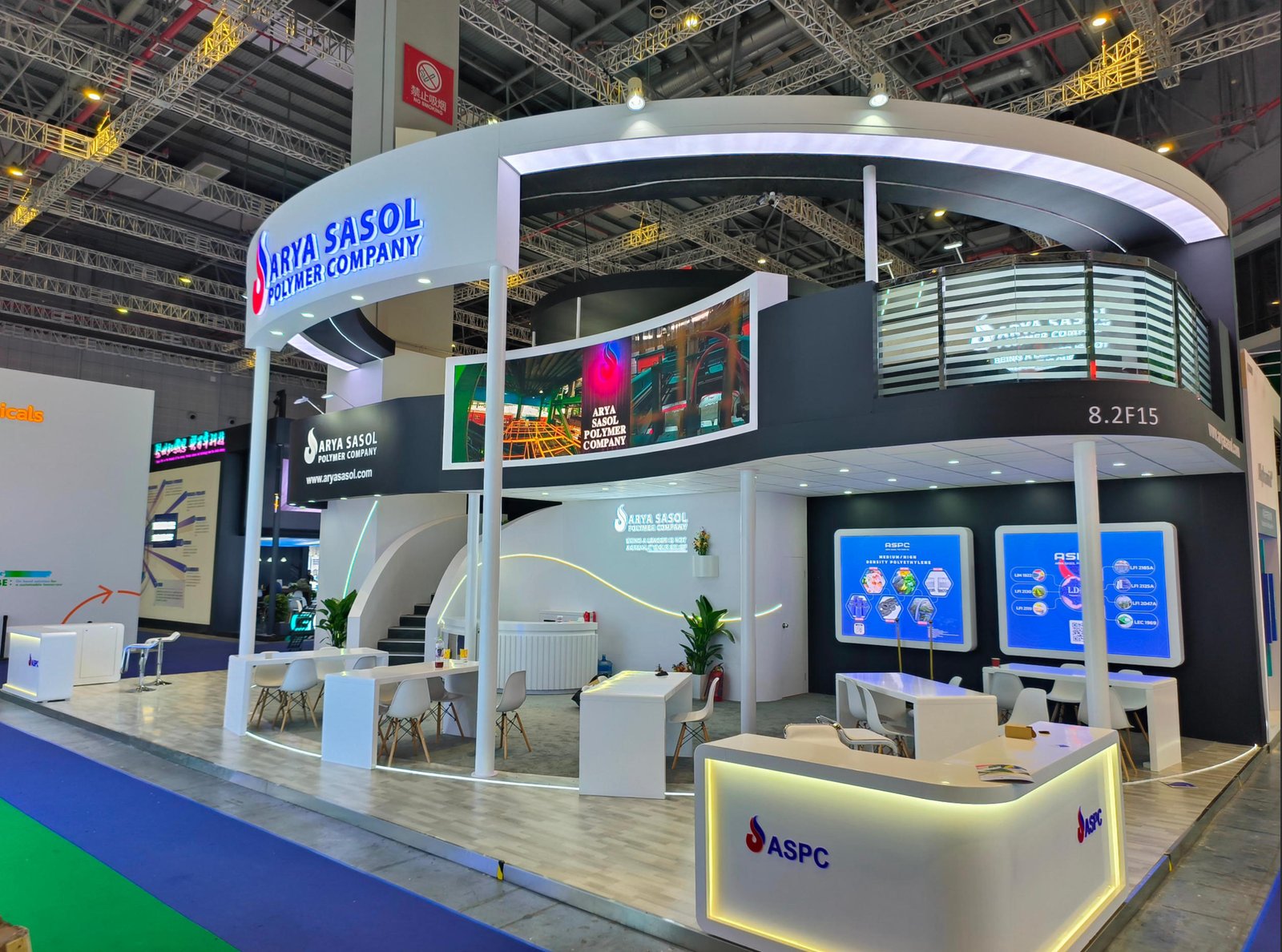

The 2026 China International Rubber and Plastics Exhibition (Chinaplas) will be held in Shanghai, attracting thousands of leading global enterprises and professional visitors.
In the highly competitive exhibition environment, the core challenge for exhibitors has shifted from “having a booth” to “how to achieve the most efficient brand communication and business opportunity conversion through the booth.” This article analyzes the strategic elements of successful booth design based on exhibition behavioral science and spatial marketing principles, combined with key industry data, aiming to provide an actionable decision-making framework for exhibiting companies.
I. The Reality Revealed by Key Data: Why Design is a Strategic Investment, Not a Cost
According to the “Global B2B Exhibition Marketing Effectiveness White Paper” (2024):
· The 7-Second Rule: The first 7 seconds a visitor spends in front of a booth determines whether they develop further interest in interaction.
· Correlation Between Dwell Time and Conversion: Visitors who stay at a booth for more than 3 minutes are 300% more likely to be subsequently converted into qualified leads.
· Information Overload: Over 65% of professional visitors report being unable to clearly remember the core information from booths with cluttered layouts and excessive information.
These figures clearly indicate that a booth lacking strategic design poses a significant risk of efficiency loss for the company’s exhibition budget (space rental, construction costs, travel, etc.).
II. Four Quantifiable Objectives of Strategic Booth Design
Successful booth design should directly serve measurable business goals. Panda Expo recommends that exhibiting companies structure their booth strategy around the following four dimensions:
1. Increase Visitor Traffic Density and Quality: Proactively attract and guide target visitor flow to core display areas through forward-thinking spatial circulation planning and visual attraction design (e.g., dynamic structures, layered lighting), rather than passive waiting.
2. Optimize Visitor Dwell Time and Interaction Depth: Create immersive, interactive experience scenarios (e.g., material experience zones, miniature production line demos, AR product breakdowns) to translate technical specifications into perceptible experiences, effectively extending conversation time and deepening brand perception.
3. Strengthen Brand Professional Image and Consistency: Transform the core brand essence (technological leadership, sustainability, reliability) into tangible spatial language, material language, and color language. Every design element should be a silent narrator of the brand story, ensuring complete unity from online promotion to offline experience.
4. Maximize Business Lead Acquisition and Conversion: Seamlessly connect on-site interaction with follow-up through intelligently designed functional areas (e.g., comfortable and efficient meeting areas, private conference rooms) and integrated digital tools (interactive screen data collection, RFID badge exchange), constructing a complete starting point for the sales funnel.
III. The Panda Expo Methodology: Providing Systematic Solutions for World-Renowned Brands
As a service provider deeply focused on exhibition displays for the rubber and plastics industry, Panda Expo’s understanding goes beyond singular design. What we provide to global renowned brands is a systematic service based on the trinity of industry insight, brand strategy, and engineering execution:
· Collaborative Pre-Strategy Development: We work with clients to analyze target customer profiles, core competitive differentiators, and Key Performance Indicators (KPIs) for the exhibition, ensuring the design aligns with business objectives from the outset.
· Industry-Tailored Creative Design: We have a deep understanding of key display focuses in the rubber and plastics industry (e.g., material properties, process precision, application solutions) and are adept at using innovative structures, materials, and multimedia to transform complex industrial products into intuitive and compelling display narratives.
· Engineering-Grade Precision Execution: We possess extensive experience in permit applications and construction at major venues like the Shanghai National Exhibition and Convention Center, ensuring complex designs and high-quality craftsmanship can be implemented safely, precisely, and within strict deadlines, controlling unforeseen risks.
· Full Lifecycle Service: From concept to dismantling, we provide full-process project management support, allowing client teams to focus on customer reception and business exchange.
Conclusion and Call to Action
The 2026 Shanghai Chinaplas is a pivotal gathering for the global rubber and plastics industry chain in the post-pandemic era. For companies aiming to enhance their influence in the global market, exhibiting is a necessity, while how to exhibit is the key differentiator for winning the competition.
We recommend that companies view booth design and construction as a significant brand marketing investment and strategic decision, initiating planning with professional partners as early as possible. An excellent booth, driven by data and strategy-led, is not only a showcase for technology but also a powerful engine for efficiently generating sales leads, strengthening partner confidence, and establishing industry leadership.
About Us:
Panda Expo specializes in booth design and construction for the rubber and plastics industry. Guided by the philosophy of “Narrating with Space, Facilitating Deals for Brands,” we have successfully provided end-to-end solutions from strategy to execution for numerous Fortune 500 and industry-leading enterprises. We look forward to partnering with more visionary companies at the 2026 Shanghai Chinaplas to jointly create exemplary displays that set industry benchmarks.