Your cart is currently empty!

Categories
Recent Posts
- How to Choose an Exhibition Booth Designer: Questions to Ask Before You Hire

- How Are Custom Exhibition Stands Designed and Built? A Step-by-Step Guide
- How to Choose an Exhibition Booth Builder in China: A Guide for US Exhibitors
- Unforgettable Moments at Villa Basset: Crafting the France WorldSkills Cocktail Reception
- Semicon Taiwan 2026
Archive
- October 2026
- September 2026
- May 2026
- March 2026
- February 2026
- January 2026
- December 2025
- November 2025
- October 2025
- September 2025
- August 2025
- July 2025
- June 2025
- May 2025
- April 2025
- March 2025
- February 2025
- January 2025
- December 2024
- September 2024
- August 2024
- July 2024
- March 2024
- February 2024
- January 2024
- November 2023
- April 2023
- March 2023
Tags
Air Cargo China BEIJING booth assembling booth builders booth construction booth contractor booth display contractor booth display ideas booth fabrication booth production China booth contractor China International Bicycle Fair 2026 CHINAPLAS CIPS cosmetics trade show China custom booth design Shanghai custom exhibition stand builders custom exhibition stand design custom exhibition stands exhibition exhibition booth construction exhibition booth design exhibition booth designers exhibition stand builder China exhibition stand builder in Shanghai Exhibition Stand Construction EXHIBITION STAND DESIGN exhibition stand designers and builders expo stand builders expo stand design FPD China 2026 Brand Activation glass industry exhibition HONG KONG Panda Expo Panda Expo China Routes Asia 2026 stand builder SHANGHAI SIAL China 2026 stand builder Sports Events in China tradeshow in guangzhou tradeshow in india tradeshow in japan tradeshow in shanghai tradeshow in vietnam Vinexpo Asia Hong Kong 2026 Exhibition Stand Construction
Social Links


Cultural Tips for Foreign Exhibitors at Chinese Trade Shows 2026: Guanxi, Mianzi & Etiquette Guide
Participating as an exhibitor at major Chinese trade shows—such as the Canton Fair, Auto Shanghai, CHINAPLAS, or events in Beijing, Shanghai, and Guangzhou—offers tremendous opportunities to connect with buyers, partners, and suppliers. However, success depends heavily on cultural sensitivity.
Chinese business culture prioritizes relationships (guanxi 关系), face (mianzi 面子), hierarchy, harmony, and indirect communication. Missteps can quickly erode trust, while respecting these norms builds lasting partnerships—often more valuable than the product itself.
Here are practical, up-to-date cultural tips tailored for foreign exhibitors in 2026.
1. Master Guanxi – Building Long-Term Relationships
Guanxi is the cornerstone of Chinese business: personal connections based on trust, reciprocity, and mutual benefit.
- Invest time before pushing deals — Use the trade show to start guanxi through casual chats about family, travel in China, food, hobbies, or shared interests. Questions like “Do you have children?” show genuine interest.
- Attend side events — Join organizer-hosted dinners, breakfasts, seminars, country-pavilion receptions, or networking sessions—these are prime guanxi moments.
- Follow up via WeChat — Within 48 hours after meeting, send a WeChat message (far more important than email in China). Include a thank-you note, meeting photos, or even a selfie with their business card to help them remember you.
- Practice reciprocity — Offer small favors (introductions, market insights, useful info) and be patient—favors are returned over time.
2. Understand and Protect “Face” (Mianzi)
Mianzi refers to reputation, dignity, and social standing. Causing someone to lose face creates deep embarrassment; giving face builds respect and loyalty.
- Avoid public criticism — Never say “no” directly or point out mistakes in front of others. Use soft phrases like “That might be challenging” or discuss issues privately.
- Give compliments freely — Praise their company achievements, booth design, products, hospitality, or team—this promotes harmony and strengthens guanxi.
- Apologize sincerely when needed — A humble, quick apology (even for small issues) restores face and demonstrates respect.
- Negotiate privately — Avoid aggressive or public hard bargaining; allow your counterpart to “save face” by conceding gradually.
3. Business Card & Greeting Etiquette
Business cards (mingpian 名片) are treated with great respect in China.
- Present and receive with both hands — Offer your card with both hands, Chinese side facing up (include a Chinese translation on the back if possible). Receive theirs the same way, study it briefly, and keep it visible on the table—never pocket it immediately.
- Greet hierarchically — Shake hands lightly (not too firm), bow slightly if appropriate, and address the most senior person first. Smile and say “Nǐ hǎo” (你好).
- Exchange WeChat right away — After cards, scan WeChat QR codes. WeChat is the #1 tool for business communication and networking in China—far more essential than email or phone.
4. Communication & Language Best Practices
- Hire a professional bilingual interpreter — Even if English is spoken, cultural nuances and indirect hints can be lost without one. An interpreter prevents costly misunderstandings.
- Learn basic Mandarin phrases — Start with “Nǐ hǎo” (hello), “Xièxiè” (thank you), and simple numbers. Apps like WeChat or Pleco help with on-the-spot translation.
- Be indirect and patient — Direct refusals are rare; “maybe” often means “no.” Listen carefully for hints and read between the lines.
- Dress code — Wear conservative, professional attire: dark suits (navy, black, grey) for men; modest, elegant outfits for women. Avoid flashy or overly casual clothing.
5. Additional On-Site & Cultural Nuances
- Respect hierarchy & teams — Chinese delegations often include multiple people. Greet and address the leader first, and treat everyone courteously.
- Be punctual — Arrive early; punctuality signals reliability and respect.
- Gift-giving rules — Bring modest corporate gifts (e.g., company pens, quality chocolates, local specialties from your country). Present with both hands. Avoid taboos: clocks/watches (sounds like “attending a funeral”), sharp objects (knives, scissors), green hats (symbol of infidelity), shoes, mirrors, umbrellas, or items in sets of four (unlucky).
- WeChat is essential — Use it for payments, sharing info, mini-programs for lead capture, and instant follow-ups. Have international roaming or a local SIM ready.
- Stay humble & patient — Avoid boasting. Decisions take time due to group consensus and hierarchy—don’t pressure for immediate answers.
Why Cultural Sensitivity Matters in 2026
In China’s massive trade show market, cultural respect often outweighs product features in building trust and long-term partnerships. Exhibitors who demonstrate genuine understanding of guanxi, mianzi, and etiquette stand out and create stronger connections.
If you’re preparing for a specific event like the Canton Fair Spring 2026 (April 15–May 5) or Auto Shanghai, consider working with local booth builders or agencies—they often provide tailored cultural briefings and support.
Start building guanxi early—your success at Chinese trade shows begins with respect. Good luck!
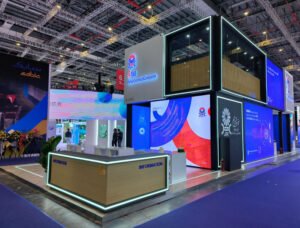
jam petrochemical company stand in chinaplas

davis-@-ciff-guangzhou-china exhibition stand construction


LUCID @VISION CHINA exihbition stand construction

zai Lab exhibition stand construction in ciie